

The System Will Fail
Systems don’t fail all at once—they drift, degrade, and quietly fall apart long before anyone notices. Fallback Engineering is about recognizing failure early, understanding what’s really breaking, and staying operational when everything else stops working.
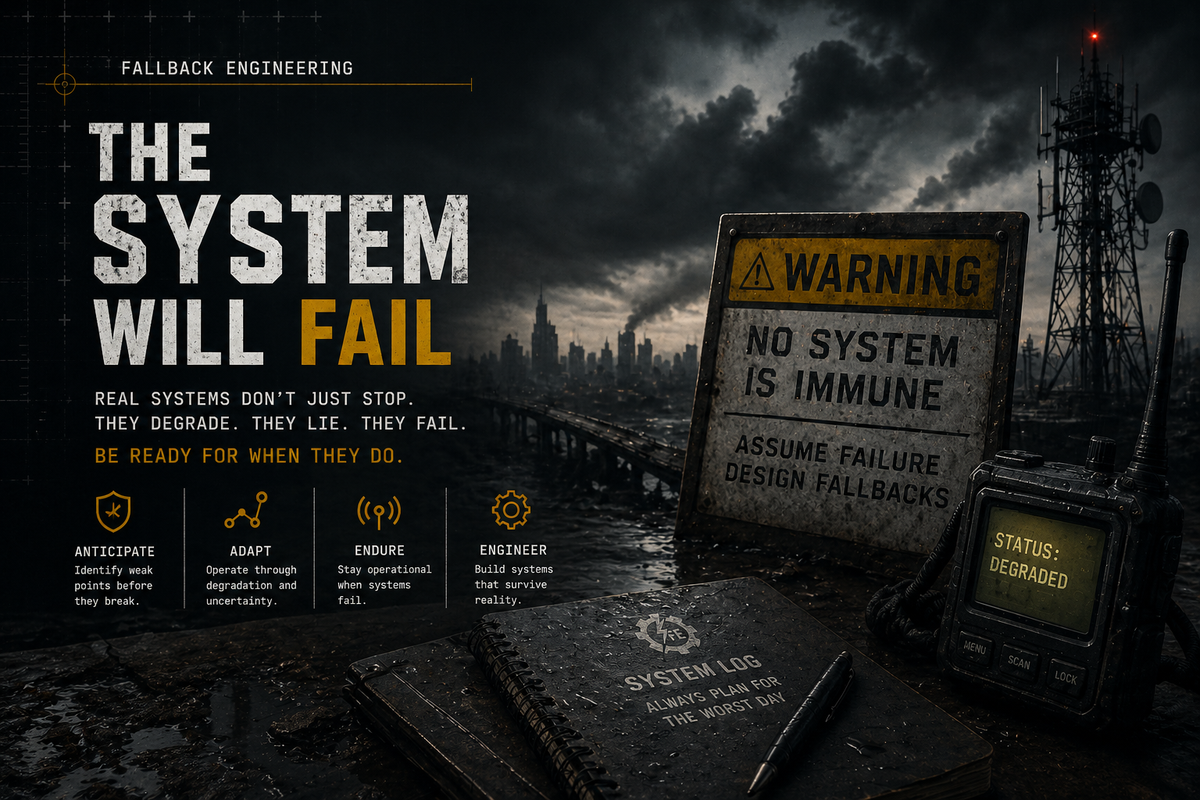
Most systems don’t fail all at once.
They drift.
They degrade.
They give you just enough confidence to keep going—right up until they don’t.
That’s the problem.
We build systems to work.
We test them to pass.
We deploy them assuming the environment will behave.
And when it doesn’t?
We improvise.
This Isn’t About When Things Go Right
Fallback Engineering exists for everything that happens after the plan breaks.
Not theory.
Not ideal conditions.
Not perfectly redundant diagrams that look great in documentation and collapse in the real world.
This is about:
- When your backup depends on the same failure
- When your monitoring lies to you
- When your “redundancy” is just duplication of a bad assumption
- When you are the only thing holding the system together
Because eventually you will be.
Systems Don’t Fail. Assumptions Do.
Every failure has a root cause.
But most of the time, that root cause isn’t hardware, software, or even configuration.
It’s an assumption:
- “This service will always be reachable.”
- “Failover will just work.”
- “Someone else owns that.”
Fallback Engineering is about identifying those assumptions before they become outages—and surviving them when they do.
The Operator Is Part of the System
There’s a version of engineering that ignores the human in the loop.
This isn’t that.
Real systems include:
- Fatigue
- Incomplete information
- Time pressure
- Bad data
- Conflicting priorities
You don’t get perfect decisions.
You get fast ones.
Fallback Engineering treats the operator as a critical system component, not an afterthought.
If It Only Works When Everything Is Right…
…it’s not a system.
It’s a demo.
Real systems:
- Degrade gracefully
- Fail predictably
- Recover intentionally
Or they don’t survive.
What You’ll Learn Here
This isn’t just philosophy.
We’re building something practical:
- How to evaluate your system under real-world stress
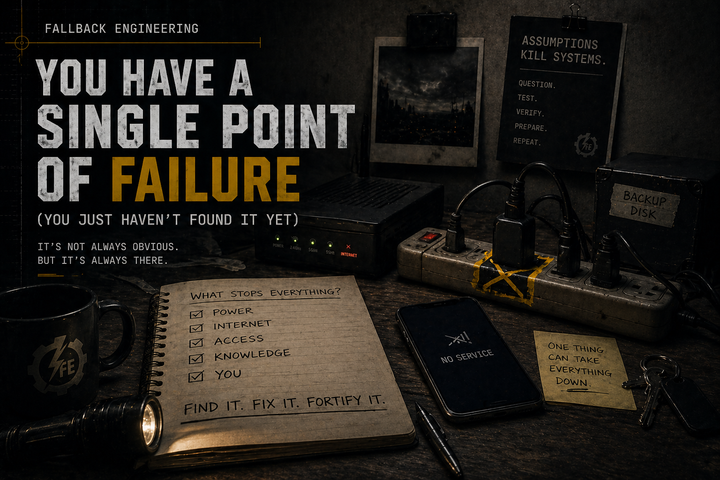
- How to identify hidden single points of failure
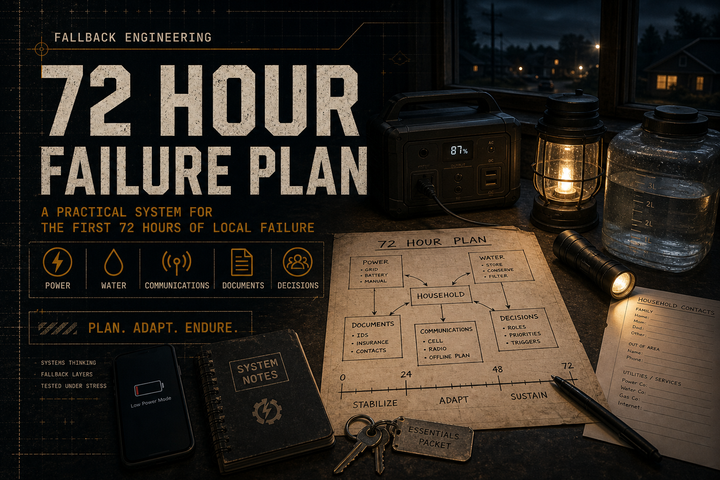
- How to plan for the first 72 hours of failure
- How to build systems that keep working when conditions don’t
No fluff.
No fantasy scenarios.
No “just add redundancy” advice.
Where This Goes Next
At some point, something you rely on will fail.
Not catastrophically.
Not dramatically.
Just enough to put you in a position where you have to make a call with incomplete information and no good options.
That moment?
That’s where Fallback Engineering starts.
Comments ()